
Innovsanté
Democratic Republic of the Congo
In Lomami Province, in the Democratic Republic of the Congo, health communication will no longer be limited to simply conveying messages. It will begin with listening. The aim is to enable health and community workers to tailor their communication to the concerns and fears expressed within the community, as well as to rumours.
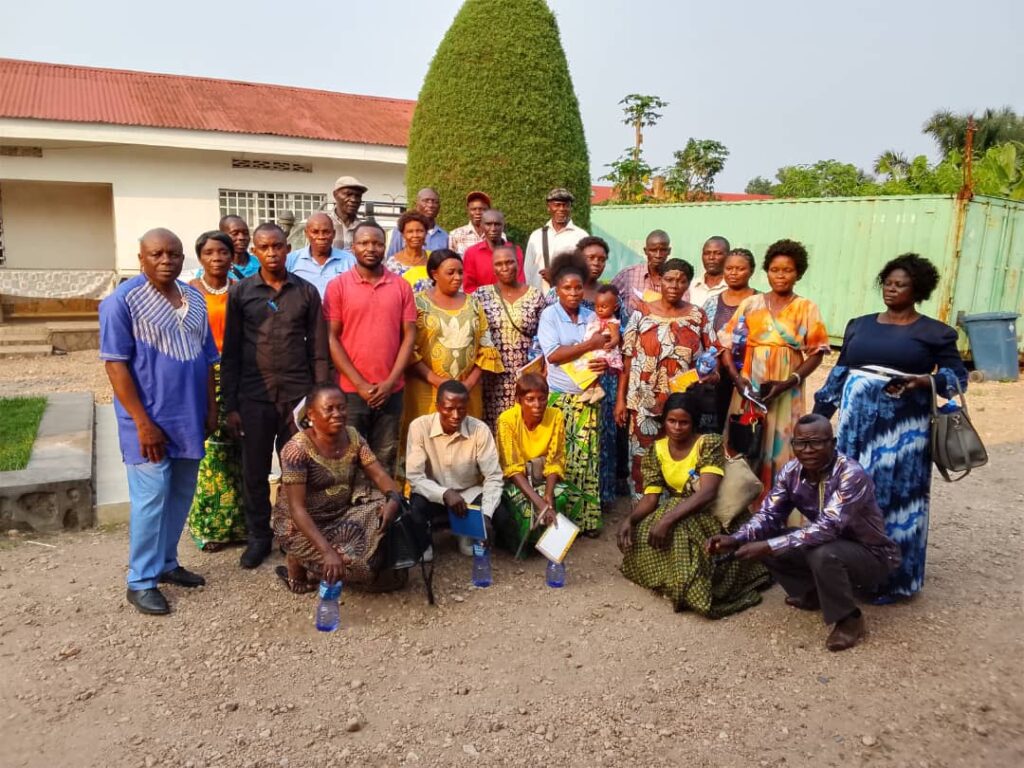
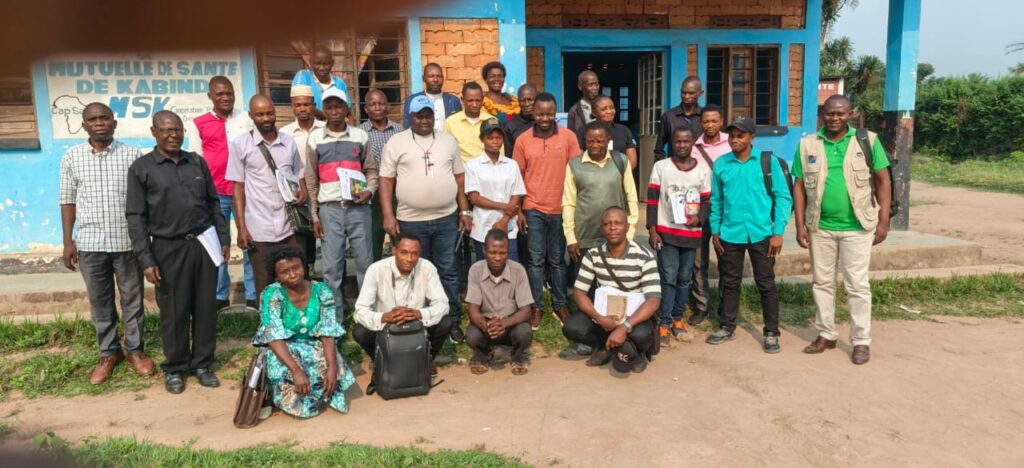
Between August and September, Ucoopia, as part of the MAV+ project, organised a series of training sessions on Risk Communication and Community Engagement (CREC) in the Ngandajika, Kabinda, Tshofa, Makota and Ludimbi-Lukula health zones.
The training covered 30 health zones and brought together 120 committed participants, mainly Community Liaison Officers (RECOs), Community Engagement Committees (CACs), religious and community leaders, nurses, community organisers (AC) and senior management teams from the health zones (ECZS).
Before the training began, an assessment was carried out to understand the level of organisation and maturity of each Health Zone with regard to CREC. This work highlighted the varying realities across different regions, as well as common challenges, such as a lack of documentation of community information, feedback mechanisms in need of strengthening, the need to manage rumours, and, more broadly, the need to better translate information from communities into concrete action.
The challenge, therefore, was to move beyond a predominantly top-down approach to communication in favour of one focused on listening to the community, understanding community concerns and proposing context-specific solutions.
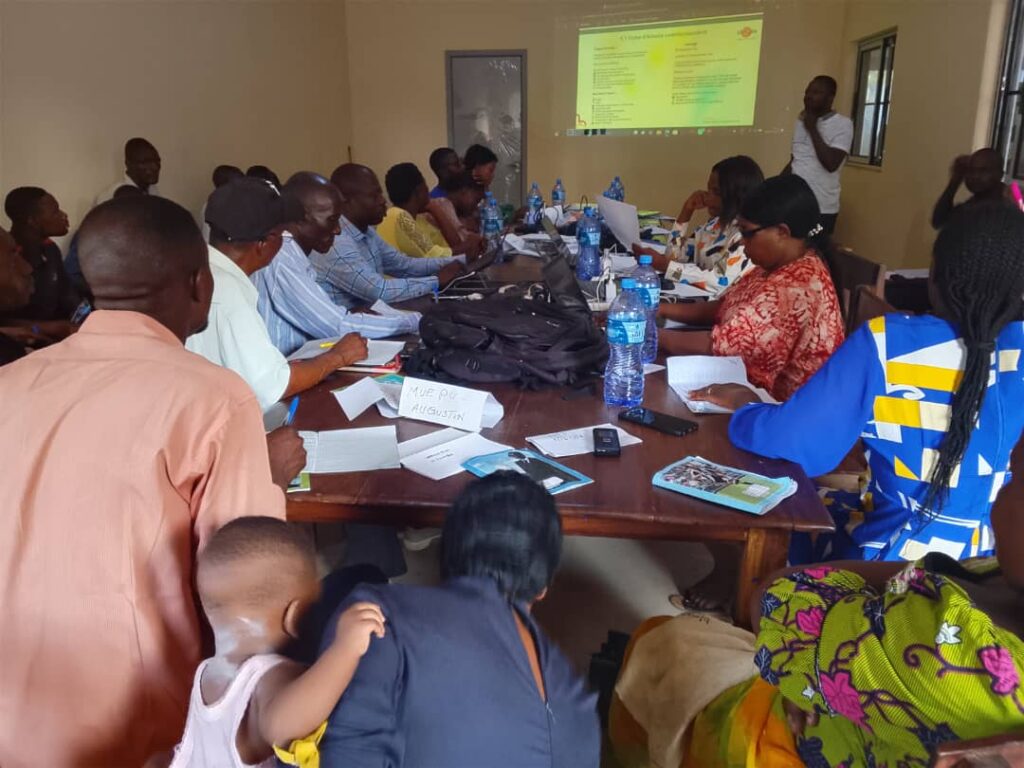
Over two days in each Health Zone, participants worked on scenarios inspired by their everyday professional experiences: a rumour about Mpox, concerns raised by a family, resistance to certain preventive measures, conflicting information, or the difficulty of engaging certain groups in community life.
The practical exercises focused on active listening, community dialogue, identifying concerns, managing rumours, two-way communication and feedback. ‘Listen before responding’ became one of the key themes of the training.
In Lomami, community dynamics vary. Health workers engage with communities that have their own ways of sharing information, their own networks of trust, their own leaders and their own ways of voicing their concerns.
The presence of religious and community leaders, alongside health teams, has in particular made it possible to approach communication as a forum for dialogue involving a range of local stakeholders.
This approach is important in the context of diseases with epidemic potential, where trust, the quality of dialogue and the ability to identify concerns quickly can influence the way in which communities understand and take ownership of preventive measures.
Through a series of exercises based on their everyday lives, participants used a number of simplified tools, such as community listening sheets, rumour-gathering sheets, a simplified community monitoring log, activity tracking tools and a feedback template.
These tools therefore ensure that any concern raised within a Health Area is recorded, documented, analysed and, where possible, addressed, and that the response is communicated to the community via a feedback mechanism.
The assessment carried out following the training sessions shows a marked improvement in the knowledge measured. Looking at the usable individual results, the descriptive mean rose from 39.8 per cent in the pre-test to 63.6 per cent in the post-test, representing an increase of 24 points, with variations observed across the different Health Zones.
These results provide an indication of the immediate benefits of the training, but they are not, on their own, sufficient to bring about a lasting change in practice.
The approach therefore includes a monitoring and coaching phase designed to support teams in using the tools, implementing CREC plans, monitoring the community, managing rumours and ensuring the smooth operation of feedback mechanisms.
Through this approach, the Mav+ project aims to create more resilient communities – particularly during outbreaks – whose members become a source of information, dialogue and learning for healthcare teams.
Democratic Republic of the Congo
 Projet clôturé
Cambodia
Democratic Republic of the Congo
Senegal
Peru
Senegal
Benin | Democratic Republic of the Congo | Senegal
Benin
Benin
Benin
Benin
 Projet clôturé
Cambodia
Burkina Faso
Belgium
 Projet clôturé
Cambodia
Guinea
Guinea
Benin
Benin
Benin | Burkina Faso
Benin
Benin
Benin
Benin
Benin
Benin
Democratic Republic of the Congo
Belgium | Democratic Republic of the Congo
Senegal

Senegal
Democratic Republic of the Congo
Democratic Republic of the Congo
Democratic Republic of the Congo
Democratic Republic of the Congo
Senegal
Democratic Republic of the Congo
 Projet clôturé
Burkina Faso
Democratic Republic of the Congo
Guinea
Democratic Republic of the Congo

Benin | Democratic Republic of the Congo | Guinea | Senegal
Belgium
Democratic Republic of the Congo

Belgium

Cambodia

Senegal

Senegal
Senegal
Senegal
Senegal
Senegal
Senegal
Senegal
Senegal
Senegal
Cambodia

Benin | Burkina Faso | Guinea | Senegal
Peru
Bolivia
 Projet clôturé
Peru