Innovation for health and the CSU in the east of the DRC
The ‘Innovation for Health and Universal Health Coverage (UHC) in Eastern DRC’ project ’ – InnovSanté, carried out in partnership with Malteser International, aims to improve equitable access to quality healthcare and strengthen the resilience of the health system in the provinces of North Kivu and Ituri, thereby contributing to progress towards UHC in the Democratic Republic of the Congo.
Financial partners


Background
In the east of the Democratic Republic of the Congo, access to quality healthcare remains severely limited by poverty, population displacement, insecurity, poor infrastructure, the cost of care, and difficulties in sourcing essential medicines and equipment. Pregnant women, children, displaced persons and refugees, people living with chronic illnesses, the destitute and victims of violence are particularly vulnerable.
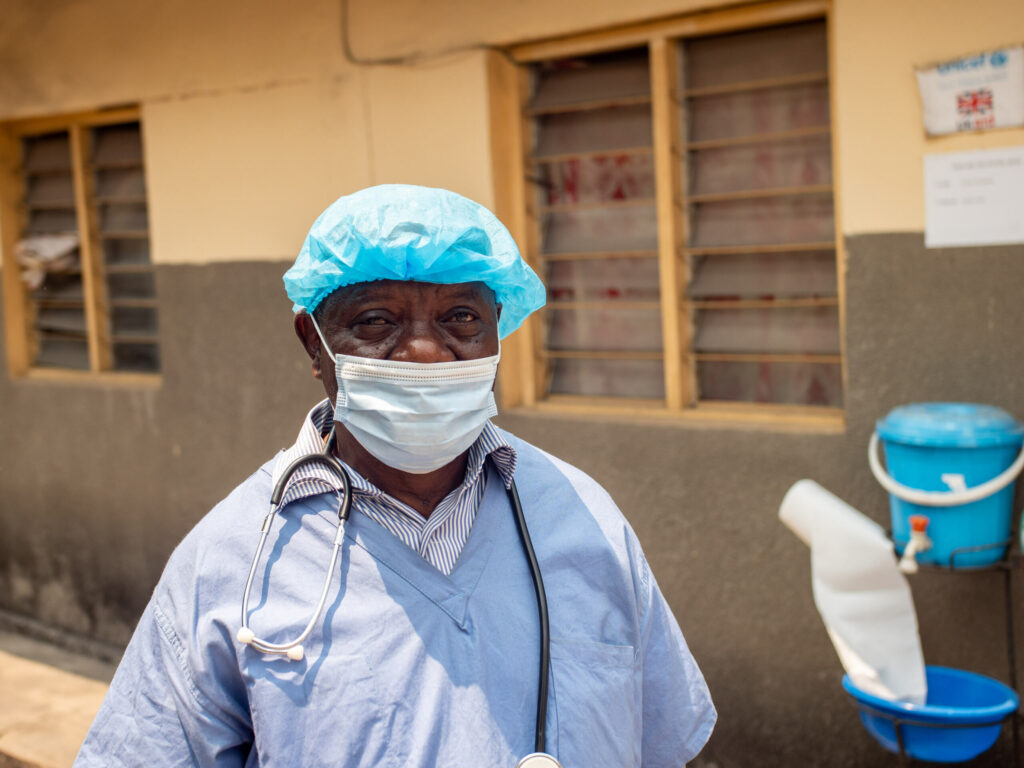
Health insurance cover remains very low in the DRC: the project proposal states that around 4 per cent of the population has health insurance and only 1 per cent is covered by mutual health organisations. In this context, paying for healthcare on a case-by-case basis is not a sustainable solution. It is therefore necessary to develop solidarity-based and sustainable funding mechanisms, whilst improving the quality and availability of healthcare provision.
The project therefore aims to address, simultaneously, the key factors determining access to healthcare:
- household finance and financial protection;
- the quality and accreditation of healthcare facilities;
- the governance and management of the healthcare system;
- the availability of medicines, equipment and human resources;
- nutrition and the prevention of malnutrition;
- the digitisation of health services and data;
- coordination between the human health, animal health and environmental health sectors, in line with the One Health approach.
The initiative also draws on the previous experience of Ucoopia and Malteser International in the areas of accreditation, digitalisation, multidisciplinary centres of excellence, risk pooling and health system strengthening. It is aligned with the DRC’s national health strategy, the National Strategy for Universal Health Coverage 2021–2030 and the European Union’s priorities regarding primary healthcare, resilience and equity.
Location
The project will be implemented in the Democratic Republic of the Congo, in the provinces of North Kivu and Ituri, across seven health zones: Butembo, Katwa, Musienene, Beni, Kyondo, Mandima and Mambasa.
Objectives
- To improve the affordability and quality of healthcare for the population, particularly women, children, internally displaced persons, refugees and vulnerable people.
- Strengthen the management, governance and organisation of the health system at national, provincial and operational levels in North Kivu and Ituri.
- To improve the quality and availability of health services, in particular by strengthening human resources, infrastructure, equipment, supply chains, nutrition and digitalisation.
ODD


Target audience
In 2025, the total population of the targeted health zones is estimated at over 2.34 million people. The project aims, in particular, to contribute to the annual care of:
- more than 93,000 pregnant women;
- around 442,000 children under the age of five;
- at least 45,000 children suffering from acute malnutrition;
- more than 28,500 people living with a chronic condition;
- nearly 422,000 displaced persons or refugees;
- around 150,000 people living in poverty or who are highly vulnerable.
Indirect beneficiaries also include healthcare providers, management teams in health zones, provincial health departments, public authorities, mutual health organisations, community organisations, universities and local economic stakeholders.
Key actions
- Establish a strategic emergency stockpile for epidemics.
- To carry out actuarial studies and studies on alternative healthcare financing mechanisms.
- To analyse the socio-economic situation of households in the two provinces.
- Organise consultations between the authorities, mutual insurance organisations, EUP-FASS, civil society and the private sector.
- To develop and test a pilot model for health insurance governance at provincial level.
- To organise the provincial federations of mutual health organisations.
- Developing public-private partnerships for healthcare funding.
- Strengthen the contractual arrangements between accredited institutions and funding bodies.
- Continue with audits and accreditation processes for hospitals and health centres.
- To maintain, on a temporary basis, schemes to subsidise healthcare for those unable to pay.
- Support the incorporation of health funding priorities into provincial and national budgets.
- Continue with audits and accreditation processes for hospitals and health centres.
- Strengthen the contractual arrangements between accredited institutions and funding bodies.
- Integrate essential health services at primary and secondary levels.
- Implement quick-win initiatives in healthcare facilities.
- To digitise patient records in pilot hospitals and health centres.
- To develop telemedicine and collaboration between healthcare facilities.
- To strengthen diagnostic capabilities through the use of a MiniLab-type mobile laboratory.
- To improve infection prevention and control.
- Strengthening the management of biomedical waste.
- To develop services for maternal and child health, mental health and support for victims of sexual violence.
- To establish or strengthen specialist services within the Beni-Butembo hospital network.
- Strengthen the collection, analysis and use of health data.
- Organise supervision sessions, audits and performance reviews.
- To support the adaptation of treatment protocols to provincial circumstances.
- Strengthen the continuing professional development provision offered by providers.
- Update job descriptions and competency frameworks.
- Carry out human resources planning.
- Support the local production of essential medicines and intravenous solutions.
- Strengthen the network of local and hospital pharmacies.
- Digitising the traceability of medicines.
- To support innovative initiatives in the production and distribution of medicines.
- To lay the foundations for an inter-city hospital network linking Beni and Butembo.
- To develop a strategy for transforming traditional health centres into multidisciplinary centres of excellence.
- Organise multi-sectoral consultation forums based on the One Health approach.
- To digitise certain tools for financial management, stock management and patient management.
- Strengthen the North Kivu Health Observatory and expand collaboration with Ituri.
- To develop a digital platform for sharing data, research and knowledge.
- Promote research findings to the private sector.
- To strengthen the involvement of universities in the prevention and control of zoonoses and epidemics.
- To identify, document and disseminate best practice.
- To purchase a fully equipped ambulance for the Beni-Butembo network.
- To build and fit out paediatric wards in Mandima and Musienene.
- To build and equip intensive care units in Beni, Kyondo and Katwa.
- Refurbishing health centres in Butembo, Beni and Katwa.
- Strengthening integrated nutritional care in healthcare facilities.
- To train and support healthcare staff and community liaison officers.
- To promote family and community nutrition.
- To support sustainable farming, fish farming and livestock farming practices.
- Set up a local food processing facility in Butembo.
- To support ASRAMES in the planning and preparation of a local Plumpy’Nut production facility.
- To support innovative initiatives in the production and distribution of fortified foods.
- To diversify households’ food sources.
Affiliated Entities and Technical Partners
- Free University of Brussels – ULB: expertise in public health, nutrition, data management, research and innovation
- The ULB Knowledge Transfer Office, promoting the commercialisation of research findings and fostering links between the academic sector, the private sector and the healthcare system
- Erasme Hospital, which may be called upon to provide support for telemedicine
- Graben Catholic University – UCG
- UNICHIR
- FEPSI
- North Kivu Health Observatory
- ASRAMES, a regional distribution centre and partner in the fields of supply, nutrition and local production
- AGRIPEL and stakeholders in the agricultural, veterinary and environmental sectors
Budget
€8,340,000, of which €7,500,000 comes from the European Union
Duration
36 months
1 October 2026 – 30 September 2029
Contact persons
Gallery
The latest news on this project
Aucun article trouvé.