Innovsanté
Democratic Republic of the Congo
As part of my master’s degree in population and development sciences, I am doing an internship with the Am Be Koun – Solidarité association in Tambacounda, Senegal. My presence there also allows me to collect the data I need for my thesis on the management of water distribution systems in rural areas.
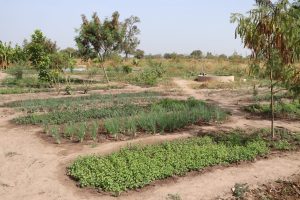
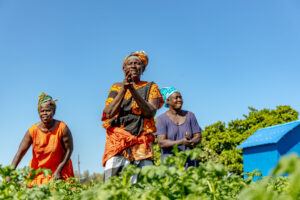
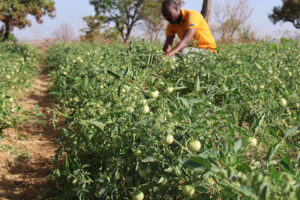
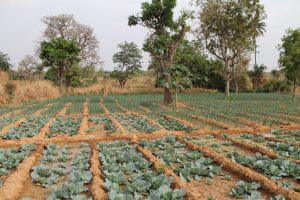
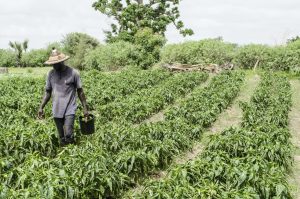
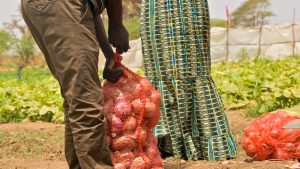
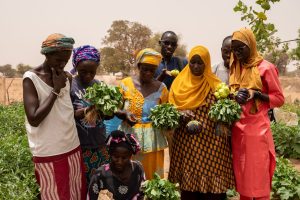
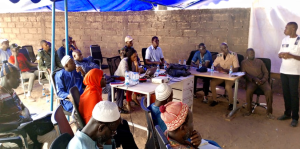
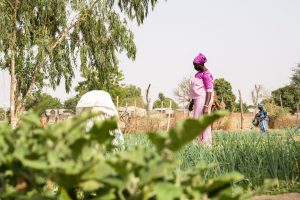
My role is to support women in economic interest groups (EIGs) in marketing their vegetable production. Currently, these five EIGs grow and sell their crops at the Tambacounda market through wholesalers. One of my goals was to raise awareness among these wholesalers about rural realities. We therefore invited them to visit the vegetable gardens and talk to the women farmers. With the support of the Am Be Koun team, the women promoted agroecological techniques and their advantages over conventional techniques. It seems that the message got through!
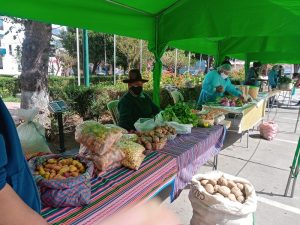
I had the opportunity to accompany the women to the market in Tamba. The journey takes place at night, with the women leaving the day before in carts pulled by donkeys. The journey is perilous because the roads are not always passable… and because donkeys are stubborn animals! Arriving at the market around 2-3 a.m., the market gardeners sleep on tarpaulins, waiting for the first customers around 6 a.m. The night journey is followed by a busy day in the stifling heat of the market. I was impressed by the energy required to then make the return journey, especially as all the women are always accompanied by their youngest child!
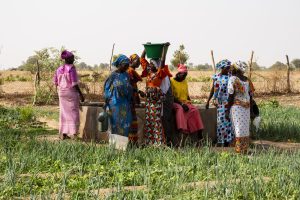
From a personal point of view, I stayed in the village of Diombodina, and this complete immersion in a traditional female environment gave me a better understanding of their daily lives. The women are constantly busy from 6 a.m. onwards, and every day is the same. A typical day? The first activity is to fetch water and store it in jars for drinking. Water from standpipes is used for cooking and washing (dishes, laundry, and bodies). Then they cultivate the fields (conventional farming and “Am Be Koun” gardening), take care of the children, prepare the various meals of the day, wash the laundry, and process the vegetables they have grown (cutting okra to sell at the market, removing peanuts from the shoots, shelling beans). I also caught a glimpse of certain aspects of how “family concessions” work, where, for example, a different woman cooks for the entire concession every other day. At the village level, I was able to observe elements of the local economy in place: each woman has her own business, one sells bread and mayonnaise, another sells oil and pepper, and they all trade with each other.
Today, I am diving into another stage in the development of the vegetable sector: the promotional aspect of economic interest groups (EIGs) and the benefits of agroecology…
Louise Laroye, intern
Democratic Republic of the Congo
 Projet clôturé
Cambodia
Democratic Republic of the Congo
Senegal
Peru
Senegal
Benin | Democratic Republic of the Congo | Senegal
Benin
Benin
Benin
Benin
 Projet clôturé
Cambodia
Burkina Faso
Belgium
 Projet clôturé
Cambodia
Guinea
Guinea
Benin
Benin
Benin | Burkina Faso
Benin
Benin
Benin
Benin
Benin
Benin
Democratic Republic of the Congo
Belgium | Democratic Republic of the Congo
Senegal
Senegal
Democratic Republic of the Congo
Democratic Republic of the Congo
Democratic Republic of the Congo
Democratic Republic of the Congo
Senegal
Democratic Republic of the Congo
 Projet clôturé
Burkina Faso
Democratic Republic of the Congo
Guinea
Democratic Republic of the Congo
Benin | Democratic Republic of the Congo | Guinea | Senegal
Belgium
Democratic Republic of the Congo
Belgium
Cambodia
Senegal
Senegal
Senegal
Senegal
Senegal
Senegal
Senegal
Senegal
Senegal
Senegal
Cambodia
Benin | Burkina Faso | Guinea | Senegal
Peru
Bolivia
 Projet clôturé
Peru