The ancestral legacy of water in the Cordillera Negra: restoration of the Shuklloc dam and strengthening the resilience of the Cajamarquilla community
The UNE Yaku joint project aims to improve the resilience and adaptive capacity of farming families in the Cordillera Negra mountain range in Ancash, Peru, by rehabilitating prehistoric water infrastructure and restoring ancestral irrigation channels. To this end, an inventory of the ancient and potentially valuable water management system is being carried out, and research is being conducted into the impact of its operation on the hydrological system and on the enterprise that benefits from the water, as well as the regulatory and procedural constraints to scaling up this initiative.
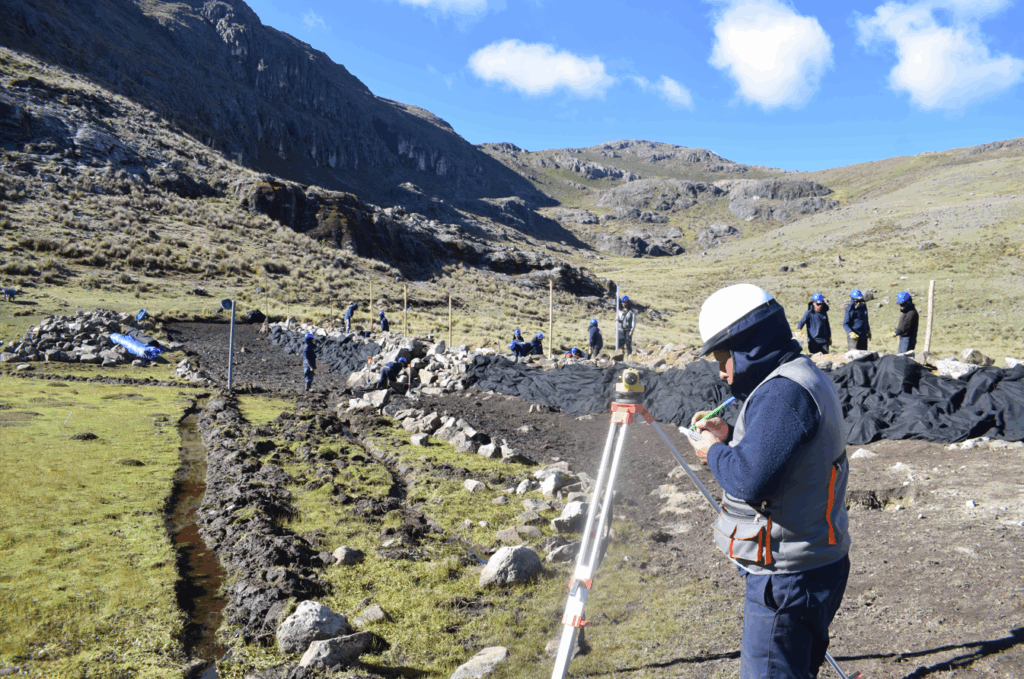
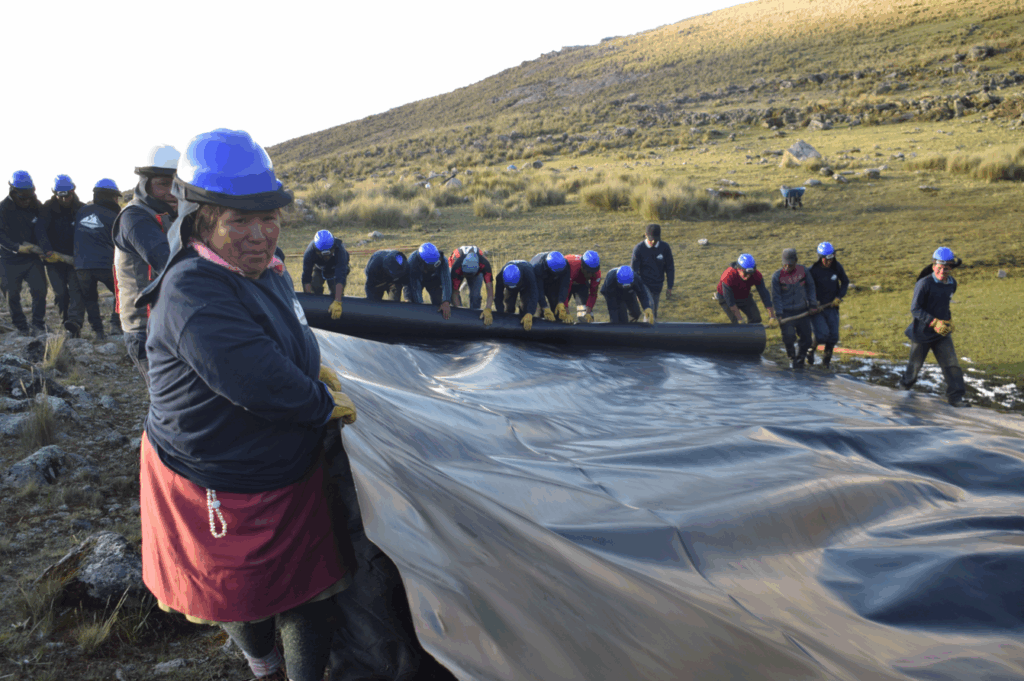
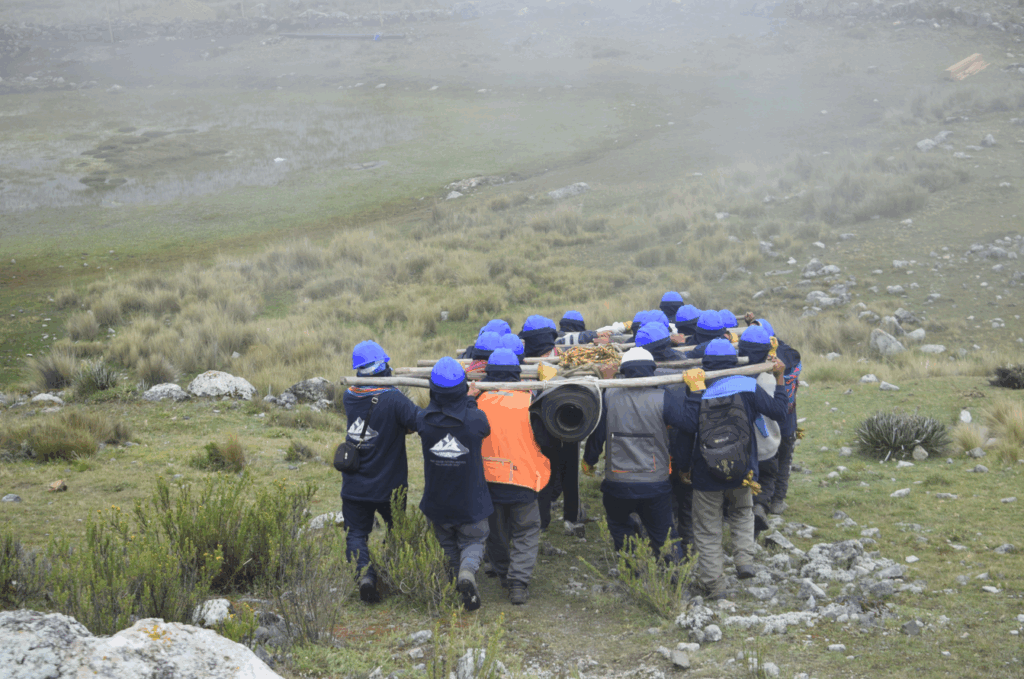
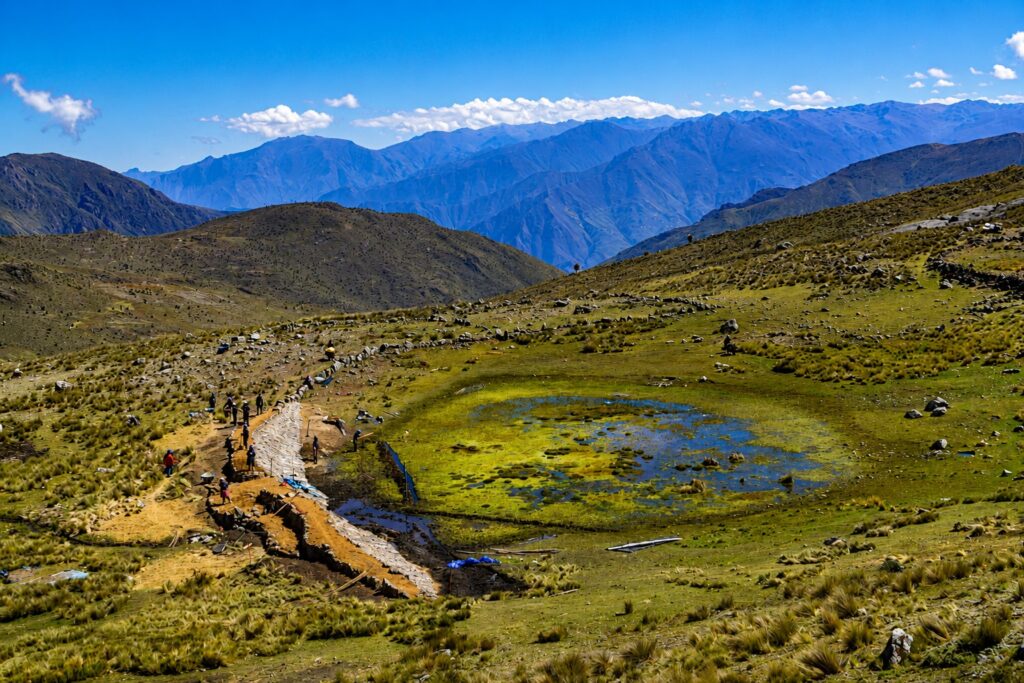
During the first few weeks of May, restoration work was carried out on the pre-Hispanic dam in the village of Shuklloc. This ancient structure is situated at an altitude of 4,300 metres above sea level within the rural community of Cajamarquilla; it stores rainwater, whilst infiltration and drainage water is supplied to the community via the Nununca reservoir and canal.
Prior to the start of fieldwork, the team from CONICET – the National Council for Scientific and Technical Research at the University of Buenos Aires (a partner in the UNE Yacu consortium) – obtained authorisations from the Ministry of Culture (MINCUL) in accordance with Peruvian regulations, as set out in the Regulations on Archaeological Interventions (D.S. 011-2022-MC). The application was submitted under the Archaeological Research Project (PIA) scheme, detailing the work to be carried out, the techniques to be applied and the project timelines, taking into account the principles of heritage restoration as set out in the regulations and in accordance with international standards.
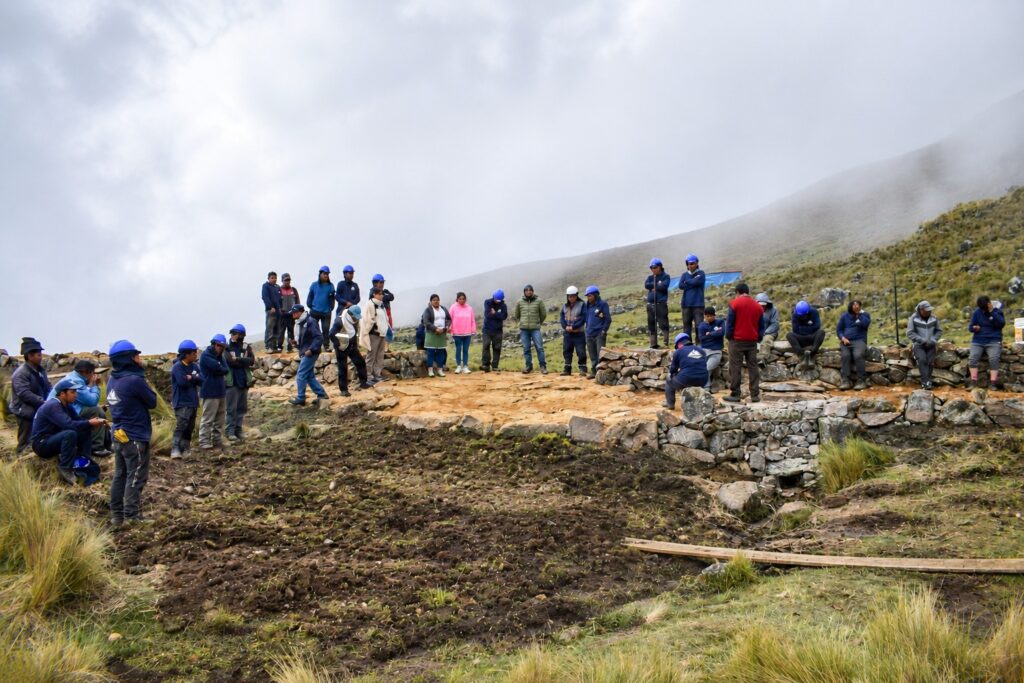
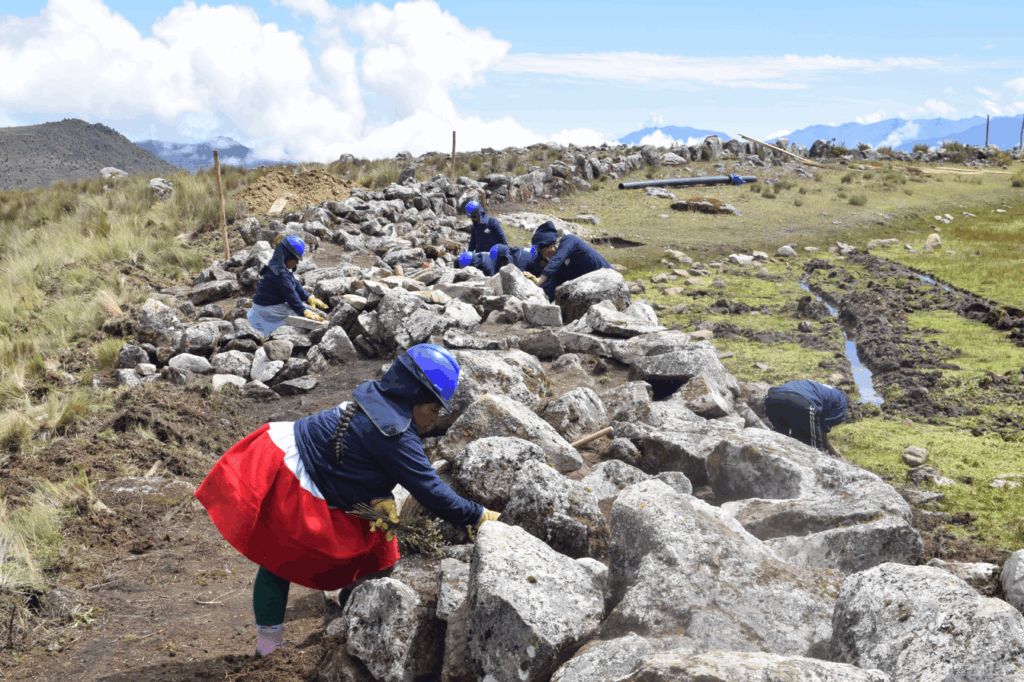
The project involved 30 community members from Cajamarquilla, with technical supervision provided by the CONICET team and support from the DIACONIA and Ucoopía teams (members of the consortium). A camp was set up on site near the qocha to facilitate the transport of materials, work shifts, and the logistics of meals and rest, ensuring the completion of the scheduled tasks (clearing access routes and vegetation from the dam, transporting stones and clay, and other tasks) in accordance with the PIA’s restoration protocol.
In this regard, the following work was also carried out: surveying the embankment, cataloguing the lithic elements, dismantling the lithic units, installing geotextile and geomembrane, consolidation of the core, assembly and replacement, installation of the outlet valve, internal reinforcement of the embankment and compaction of the added clay.
Finally, the restoration work culminated in a delicious, traditional Andean festive lunch known as ‘Pachamanca’, attended by technicians from the UNE Yacu consortium, the district mayor, as well as the leadership of the Cajamarquilla rural community, who were satisfied with the results and undertook to carry out maintenance work on the dyke as and when required in the future, and to continue with the restoration of the other components of the ancestral irrigation system.