Sustainable management of mangrove ecosystems
Working to complement mangrove conservation, socio-ecological resilience, and improving the well-being of local populations, Ucoopia (formerly ULB-Coopération), as part of the Uni4Coop consortium, contributes to improving governance in favor of mangroves, raising awareness, acquiring and sharing knowledge and skills about these natural areas, and restoring these ecosystems. On the Ucoopia (formerly ULB-Coopération) side, research, including a doctoral thesis, is supported by the team at the ULB’s SERM laboratory, led by Professor Farid Dahdouh-Guébas. Another doctoral research project is underway with the ILEE laboratory at the University of Namur. All of this, of course, is being done in full synergy with African universities.
The program is shared by five African countries: Senegal and the Democratic Republic of Congo (Ucoopia project, formerly ULB-Coopération), Benin (Louvain Coopération project), Guinea (Ucoopia project, formerly Eclosio), and Madagascar (Louvain Coopération project). It is based on a previous joint project, Expertise Universitaire Mangroves (EU-M), implemented in 2018-19. The results will benefit other mangrove areas, particularly in West Africa, through the West African Marine Protected Areas Network (RAMPAO), the 5 Deltas Collective (Gambia, Guinea, Guinea-Bissau, Mauritania, and Senegal), the Benin Gulf Deltas Collective (Benin, Côte d’Ivoire, Ghana, Nigeria, and Togo), the MIHARI network in Madagascar, and in Central Africa, in the Mangrove Marine Park in the DRC.
This program is in line with the work of the Stockholm Resilience Center.
Financial partner

Background
According to the FAO, Africa has lost nearly 500,000 hectares (more than 688,000 football fields!) of mangrove forests over the past 25 years. Mangrove areas represent a fundamental biological resource and play a major role in the economy given the resources they provide to local populations.
Factors contributing to degradation include climate change (coastal erosion, changes in salinity levels, droughts), human activities such as overexploitation of wood resources (charcoal, construction timber) and fishery resources (shellfish, fish, etc.), rice cultivation, aggressive tourism activities, and a lack of local initiatives to protect, conserve, and restore mangroves.
The basic needs of populations are affected by the disappearance of mangroves: food supplies are impacted, sources of income are severely altered (e.g., income from fishing and gathering plants for use in traditional medicine). The poorest and most vulnerable groups tend to be the most dependent on these types of activities (“ecosystem services”) and thus find themselves in an even more precarious situation. Among ecosystem services, it should also be noted that mangroves, particularly their soils, contain an impressive amount of sequestered carbon. This means that when this ecosystem is destroyed, this carbon is released into the atmosphere (just like peat bogs).
Added to this is the threat of land grabbing by private investors, which risks disrupting the biodiversity of these already fragile areas. It is this complex environment that gives rise to the need for our intervention, which aims to achieve socio-ecological resilience by improving the well-being of communities living in mangrove ecosystems and preserving their environment.
Location
Saloum Delta: Municipalities of Palmarin
Objectives
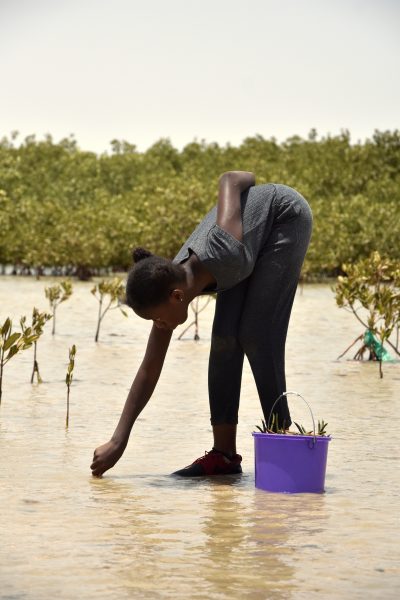
The intervention strategy is based on raising awareness and improving governance of mangrove areas, increasing knowledge and skills relating to these natural spaces, strengthening sustainable access, management, and use of ecosystem services, conserving and/or restoring the environment, and, finally, consolidating the capacities of the nine partners.
Sustainable Development Goals (SDGs)

Actions
The four actors targeted by the project are: civil society organizations, community management committees, public authorities and agencies, and academic partners.
The actions carried out together are:
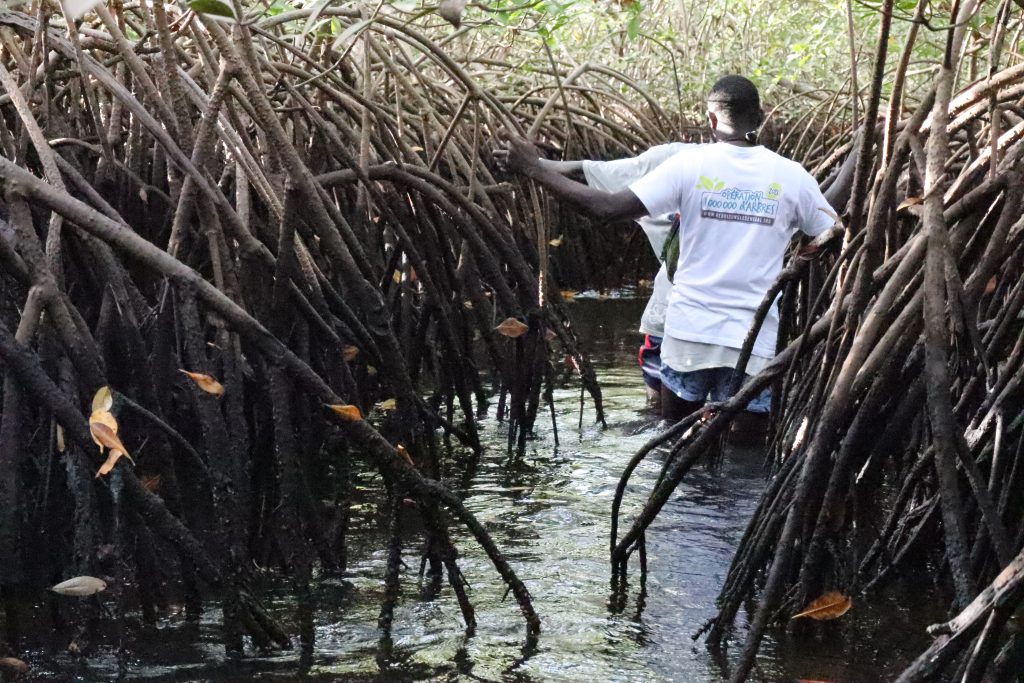
- Capacity building for local associations and other stakeholders (eco-guards, municipal councilors) to raise awareness of the vulnerability of the Palmarin Community Nature Reserve (RNCP) and improve governance (surveillance, reforestation monitoring, awareness raising).
- Support for the development and strengthening of income-generating activities
- Action research, including doctoral theses, dissertations, and studies conducted in collaboration with universities in the North and South, research centers, partner NGOs, and public services.
- Capitalization and sharing of knowledge and experiences
Budget
€450,000
Duration
5 years: 2022–2026
Contact persons
In a few pictures
Make a donation!
Related news
Aucun article trouvé.
Related projects
Aucun projet trouvé.