Our history
Ucoopia was born out of the merger of two Belgian university NGOs: ULB-Coopération and Eclosio, with the active participation of UMONS.
Launch of Ucoopia
On January 1, 2026, Ucoopia was officially launched. Supported by its three founding universities—ULiège, ULB, and UMONS—Ucoopia became Europe’s first inter-university NGO, symbolizing a shared academic commitment to sustainable development and international cooperation.
On the way to Ucoopia
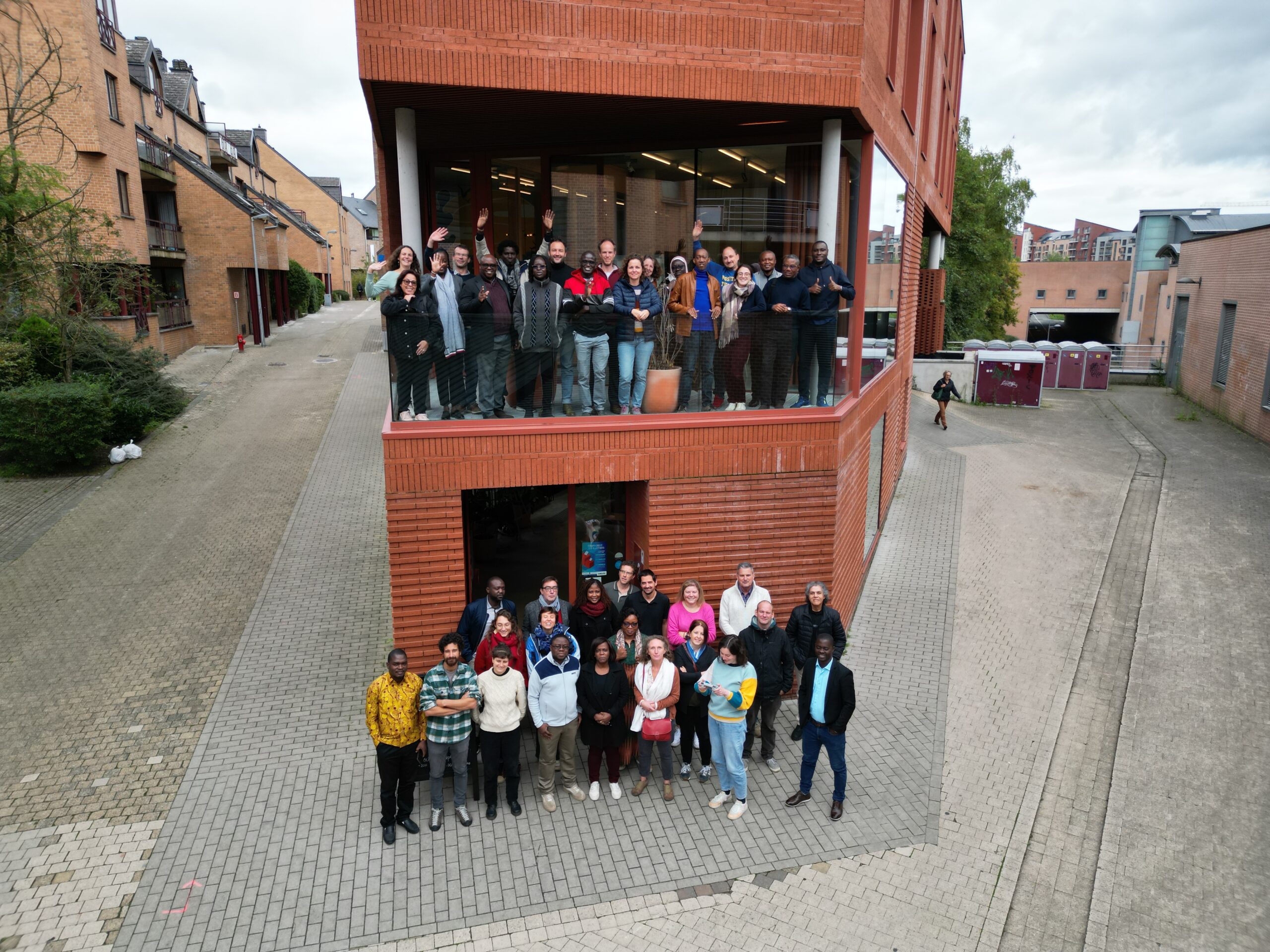
In 2024, the decision was made: driven by a shared vision and working methodologies, ULB-Coopération and Eclosio began the process of merging to form a single NGO. The University of Mons (UMONS) quickly joined the initiative. A few months
later, the first strategic workshops brought together members of the two NGOs and the three founding universities.
first collaborations
Between 2017 and 2021, Eclosio and ULB-Coopération joined forces in their first joint program, carried out within the Uni4Coop consortium, which brings together Belgium’s four French-speaking university NGOs.
This collaboration is intensifying: a first position shared between the two NGOs will be created in 2021, followed by the opening of a joint office in Senegal in 2022.
In the same year, a second five-year program (2022–2026) will be launched, further strengthening the synergies between the two organizations.
The origins of Eclosio
Eclosio, the University of Liège’s NGO, was created in 2018 from the merger of ADG and UniverSud-Liège. This merger formalizes Eclosio’s role as the University of Liège’s NGO, with offices located on the Gembloux and Liège campuses.
THE ORIgins of <br>ULB-Coopération
ULB-Coopération, the NGO of the Free University of Brussels, was created in 2014 following the merger of three organizations with strong roots in development cooperation: CEMUBAC, SLCD, and SEDIF.
Creation of ADG
Founded in 1986 on the initiative of the University Faculty of Agricultural Sciences of Gembloux, Aide au Développement Gembloux (ADG) has carried out numerous projects in countries known as “the South” to promote food sovereignty among populations. Since 2011, ADG has also organized civic education initiatives for the university community, students of agronomy, and the population of Gembloux.
creation of SEDIF
Active since the 1970s following the arrival of numerous political refugees from several Latin American countries under dictatorship, SEDIF (the ULB’s Latin American Information and Training Service) officially became a non-profit organization in 1984.
creation of SLCD
The SLCD (Secular Development Cooperation Service) is a non-profit organization formed on the initiative of individuals associated with the Free University of Brussels who wish to promote the values cherished by the ULB in the field of development, namely secularism and free inquiry.
creation of Universud-Liège
UniverSud-Liège was founded by a group of professors from the University of Liège seeking to leverage academic expertise in cooperation projects. For more than 30 years, UniverSud-Liège has developed development projects in the South in various fields (health, education, community development, access to water, urban agriculture, etc.) as well as information, awareness-raising, and mobilization activities among the university community and the population of Liège.
creation of cemubac
CEMUBAC (Scientific and Medical Center of the Free University of Brussels in Central Africa) was created to extend the influence of the ULB in the Belgian colonies of Central Africa (Congo and Ruanda-Urundi). Numerous university teams conducted important research there, particularly in the field of combating deficiencies and malnutrition.