Promoting sustainable food systems through a human rights-based approach (impulSAD Bolivia)
The IMPULSAD program aims to promote the rights to food, natural resources, and land for rural and peri-urban families in Bolivia.
Background
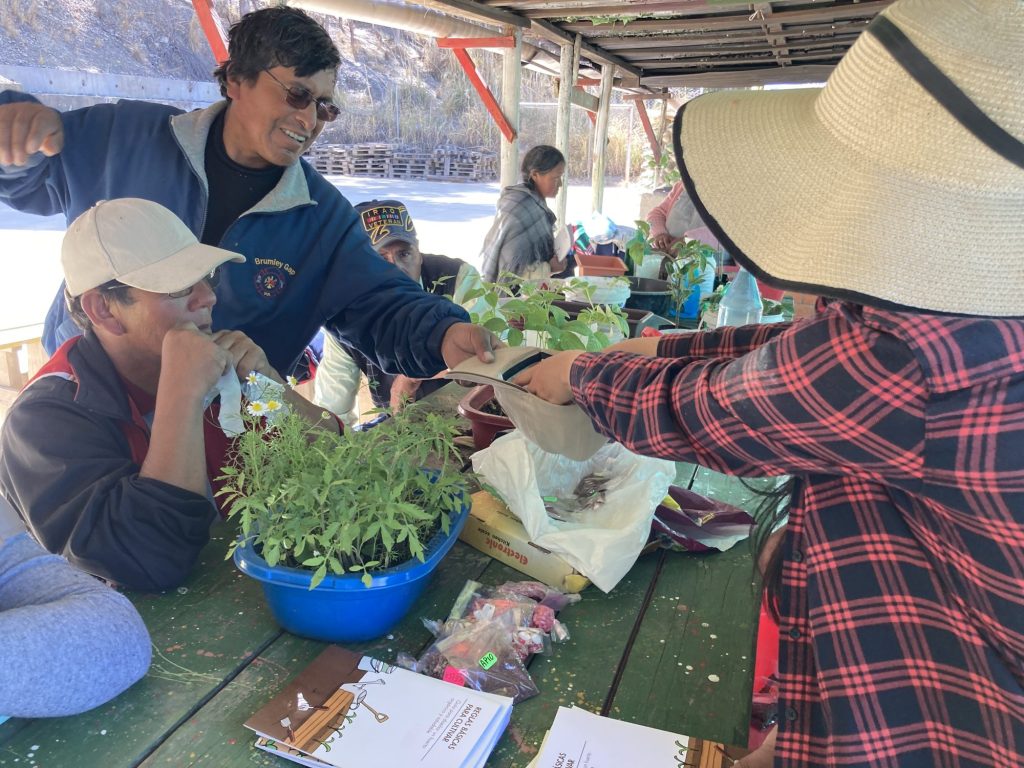
The ImpulSAD program is implemented in various cultural and geographical contexts in Bolivia, involving Quechua, Aymara, mestizo, and Creole populations with complex territorial development dynamics, tensions, and conflicts concerning their livelihoods, land use, natural resources, and the environment. These are vulnerable populations in rural and peri-urban areas, particularly women and young people, who live in situations of poverty, malnutrition, and food insecurity.
Financial partner

Location
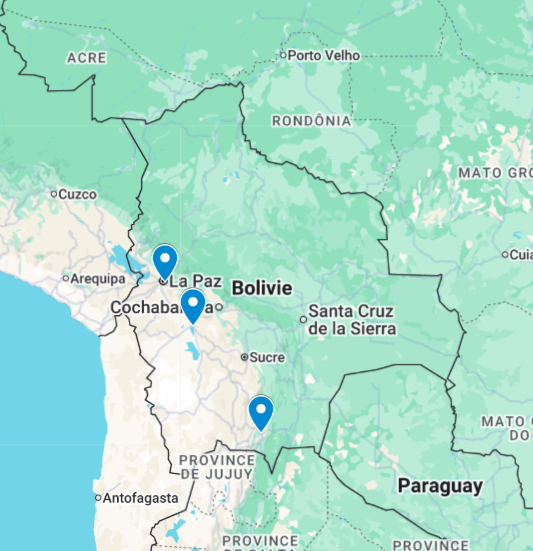
Departments of La Paz, Oruro, and Tarija.
Sustainable Development Goals (SDGs)

Our action
This program is being carried out jointly by teams from Eclosio and Louvain Cooperation (within the Uni4Coop consortium). Following an initial collaboration as part of the previous 2017-2021 program, the two NGOs are implementing two joint projects in Peru and Bolivia as part of the 2022-2026 impulSAS program. This work will be carried out based on the contributions, experiences, and expertise of partners from both institutions.
The project will impact 6,984 women and 6,719 men from families of producers, entrepreneurs, students and teachers, academics (researchers, students), local authorities and leaders, communicators, and promoters.
Key findings and strategies/actions
The following results are expected:
Result 1: Strengthened local partners promote the exercise of rights and supportive environments.
- Institutional strengthening of our partners and beneficiaries so that they can fulfill their role as promoters of change and debate, in an environment conducive to the exercise of individual and collective rights.
- At the local or pilot level, promote the association, local governance, local youth networks, etc.
Outcome 2: Women, men, and their organizations improve environmental resilience and awareness.
- Awareness raising and capacity building on issues such as the environment, climate change, access to land, etc.
- Land and natural resource management in local contexts.
Outcome 3: Women and men apply agroecological models within sustainable food systems.
- Awareness raising, advocacy, and capacity building on family farming, agroecology, and sustainable food systems.
- Transitions and scaling up of agroecology and agroforestry systems.
Result 4: Agricultural and non-agricultural entrepreneurs are integrated into green and inclusive production and marketing channels.
- Awareness raising and advocacy on the green and inclusive economy.
- Transformation initiatives and short supply chains for agroecological products.
Outcome 5: Women exercise their physical, economic, and decision-making rights with greater autonomy and power.
- Raising awareness and advocating with decision-makers for a change in attitudes and policies that favor rural women.
- Empowerment of rural women; prevention of gender-based violence in schools.
Result 6: Local partners promote mutual learning and the joint development of knowledge with all stakeholders.
- Capacity building and leadership development for target groups and inclusive knowledge management, promoting inter-learning and the co-construction of knowledge and innovative practices among stakeholders—with a focus on young people and the articulation between farmers, academics, consumers, etc. – so that they become the agents of change: training, action research, research, exchange of experiences, capitalization, and dissemination.
Operational partners
Duration
5 years: January 2022–December 2026
Contact persons: Eric Capoen
Related publications
Related news
Aucun article trouvé.