PARISS: Project to support the integrated strengthening of the health system in North Kivu
The project aims to strengthen the health system in North Kivu and improve its resilience to epidemic shocks in the Karisimbi and Nyiragongo areas.
Background
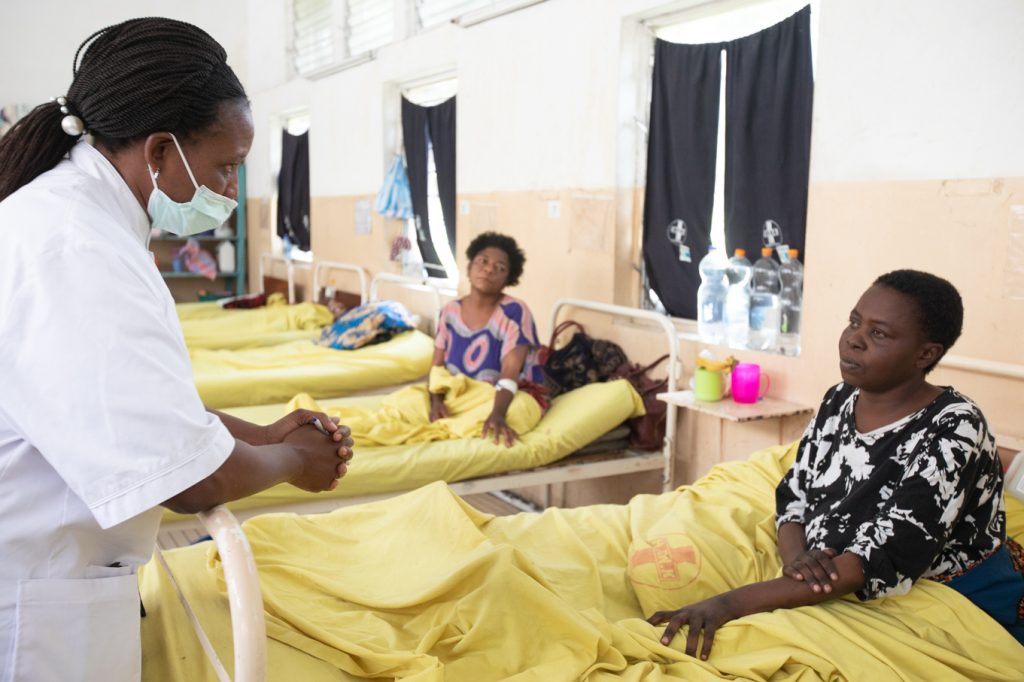
The province of North Kivu is located in the east of the Democratic Republic of Congo and has a population of around 10 million. The vast majority of the population lives below the poverty line, infant mortality is very high, as is chronic malnutrition. Urbanization is widespread, but healthcare coverage has not kept pace and remains inadequate. In addition, the province has been exposed to violent and deadly armed conflict for many years, compounded by the risk of eruptions from the Nyiaragongo volcano (last eruption in May 2021) and outbreaks of epidemics such as Ebola and, more recently, COVID-19.
The Karisimbi health zone (approximately 620,000 people) is an urban area (Goma) with a very high population density and significant healthcare provision, but with little oversight and often of questionable quality.
The Nyiragongo health zone is located in an urban and peri-urban area north of Goma and on the outskirts of Virunga National Park. It suffers from both a lack of health infrastructure and severe difficulties in accessing water.
Financial partner
Location
Objectives
- Strengthen the capacities of provincial and zonal authorities (in supervision, gender, infection prevention, laboratory)
- Improving the quality and availability of healthcare services
- Strengthening community dynamics
Sustainable Development Goals (SDGs)

Expected impacts
The project will improve the organizational capacities and skills of the Provincial Health Division. It will also improve the quality and availability of care: increased capacity, equipment and staff training, management structuring, and the establishment of a sustainable economic model. Finally, it will improve people’s knowledge and autonomy with regard to the prevention and control of epidemics, and sexual and reproductive rights, particularly in relation to family planning and gender-based violence.
More than 500,000 inhabitants, including 260,000 women and 96,000 children under the age of 5, will benefit directly from the project, and more than 700,000 inhabitants, including 381,000 women and 136,000 children under the age of 5, will benefit indirectly.
Actions
- Initiate the implementation of training programs, technical assistants, and logistical resources for the Provincial Health Division (DPS) and Zone Management Teams (ECZ).
- Ensure the use of harmonized performance monitoring tools (including gender)
- Supporting the operational monitoring of management teams
- Lead and coordinate infection prevention and control (IPC) activities and practices.
- Securing the input chain
- Structure diagnostic methods and epidemiological surveillance
- Supporting holistic care for victims of gender-based violence (GBV)
- Ensure continuity of input supplies
- Optimizing care practices
- Strengthen the surveillance system (PCI and epidemiological surveillance)
- Initiate holistic care for victims of violence against women and girls, including legal clinics.
Operational partners
- AEDES (European Agency for Development and Health), a consulting firm specializing in public health. It has extensive experience in supporting the health system in the DRC, which has enabled it to develop a large network of experts covering the various areas that are key to the implementation of the project: quality of care, drug supply and management, health information systems, computerization of hospitals, support for health zones, etc.
- Prospective et Coopération, a cooperative association that aims to promote innovative policies and practices. It relies on the mobilization of a multidisciplinary and pluralistic network in the North and South that brings together a wide variety of expertise in order to respond flexibly and creatively to the needs of international cooperation actors.
- ASRAMES (Regional Association for the Supply of Essential Medicines), a regional drug distribution center, which has been mandated to ensure the availability and accessibility of essential medicines to the entire population in its area of operation (North Kivu and beyond).
- EUP FASS (Public Utility Establishment for the Purchase of Services), an operational foundation that manages the financing of health services and care, with a view to improving access to health services for the population in the province of North Kivu.
- CFNK (North Kivu Continuing Education Center), whose missions are: strengthening provincial trainers, continuing education for provincial medical and nursing staff in their technical, social, and managerial skills. The CFNK’s approach is characterized by expertise in andragogy and the use of cutting-edge simulation techniques.
Budget
€9,000,000
Duration
4 years: October 29, 2022 – October 28, 2026
Contact persons
Related news
Aucun article trouvé.