MIPRO2
Inclusive markets for producers in mangrove areas in Casamance and Sine Saloum – Project scaling up (MIPRO2)
Background
Casamance and Sine Saloum are home to vast mangrove forests that fulfill important ecological and socioeconomic functions. These forests are home to a wide variety of flora and fauna, provide wood and non-timber products directly to local populations, protect the coastline, and have ensured the livelihoods of communities for generations. In addition, mangroves play an important role in regulating the global climate, storing around 1,000 tons of carbon per hectare.
Faced with climate change and the overexploitation of natural resources, mangrove forests are being negatively impacted, even though it is essential to preserve them.
That is why, over the past 20 years, considerable efforts have been made to conserve and restore this ecosystem throughout Senegal. Among these actions, Eclosio has supported, through the MIPRO project (2022-2024), income-generating activities (IGAs) for communities in promising sectors. These IGAs have been developed using an environmentally friendly approach to avoid putting pressure on mangrove resources. The MIPRO II project aims to increase the impact and expand the geographical scope of this initial project until 2027.
Financial partners
Location
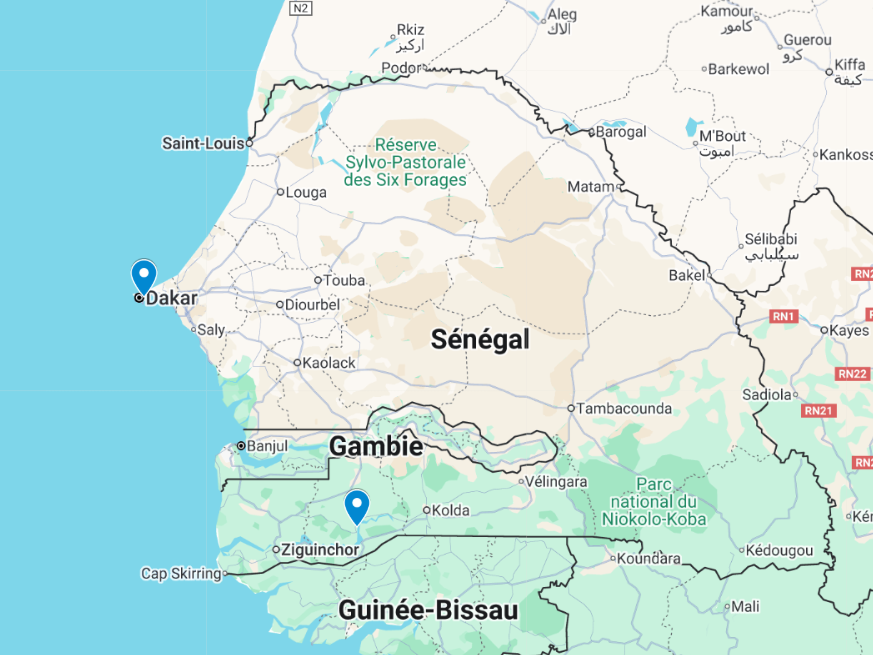
Casamance: municipalities of Coubalan, Ouonck, Djibabouya, Bemet Bidjini Oukout, Santhiaba Manjack Nyassia, Enampore, Kafountine, Mangagoulack, and Djinaky
Sine Saloum: municipalities of Fimela, Djilass, Loul Sessene, Djirna, and Mbam
Sustainable Development Goals (SDGs)

Our action
The MIPRO II project aims to sustainably improve the livelihoods of communities living near mangrove ecosystems by strengthening their access to and participation in the local produce market system.
To achieve this objective, the project will organize workshops with communities to select the most promising sectors (e.g., honey, mangoes, salt, shrimp, etc.) using the Market Analysis and Development (MAD) approach.
The intervention strategy for each sector will then be defined with the communities using the M4P (Making Markets Work for the Poor) tool. This practical approach improves coordination within the sector, in particular by identifying barriers that prevent access to the market.
The third step will be to support producers/cooperatives so that they can plan and develop their businesses. Personalized support will include a range of coaching activities and technical and managerial capacity building (accounting, marketing, sales, human resources, business plan development, etc.), encompassing both financial and non-financial support.
Exchange visits between groups of companies will also be organized to enable entrepreneurs to learn from the experience of their peers in the selected sectors.
Finally, workshops will be organized to jointly develop a shared vision of environmentally friendly production and a resource management plan. These workshops will lead to the implementation of a “Participatory Guarantee System” (PGS) certification process and a “charter for the sustainable production and exploitation of mangrove products.”
Operational partners
Budget
€600,000
Duration
2024–2027 (30 months)

Related publications
Related news
Aucun article trouvé.