Insect4Benin
Between 2003 and 2020, animal protein production in Benin increased slightly, but remains insufficient in the face of rapid population growth. By 2050, the population is expected to double, putting increased pressure on food resources. To address this, sustainable alternatives such as edible insects are being considered, although they are not widely available year-round. Recently, the Insects Food and Tour project (2021-2024), funded by the WBI, has supported the development of this sector in Benin. It has enabled the establishment of production units, the creation of educational and culinary content, and tourism promotion activities. These initiatives highlight innovative approaches and effective solutions that, once shared and adopted, can serve as an inspiring reference for the implementation of similar projects in various contexts, thereby contributing to the advancement of knowledge and sustainable practices on a global scale.
Our action
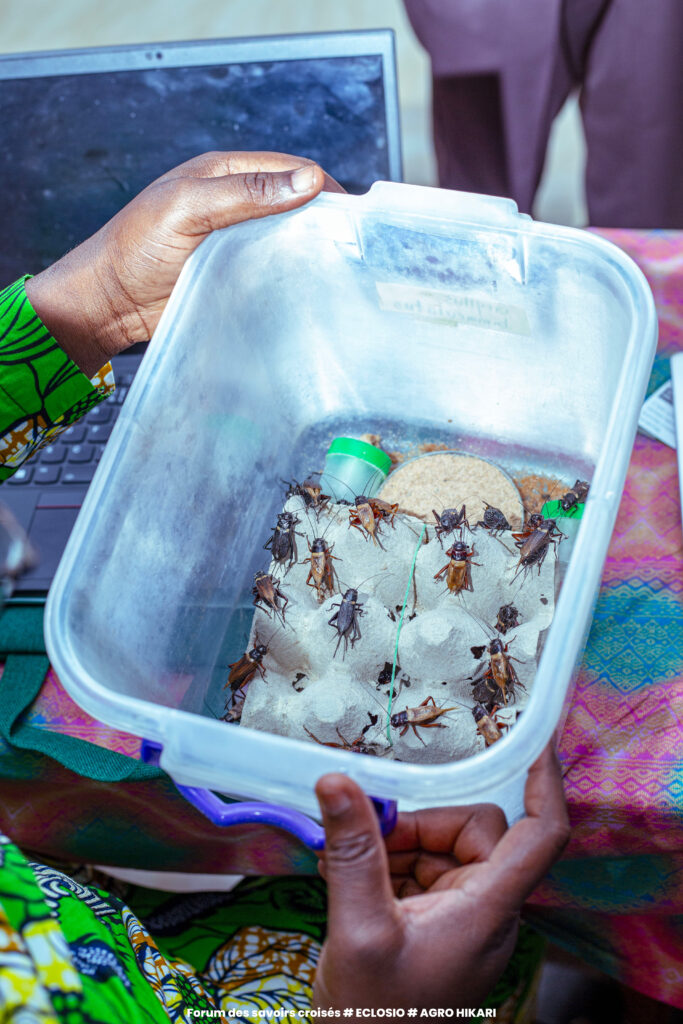
Our project addresses the issue of growing pressure on traditional sources of animal protein in Benin by developing a sustainable industry based on edible insects, particularly crickets.
Its primary aim is to popularize techniques for identifyingand producing local species by training village brigades and women’s groups, supported by the distribution of breeding kits.
It also promotes processing and cooking techniques for the hospitality industry, school cafeterias, and students, with hands-on workshops and educational materials.
The scientific dimension is ensured by the dissemination of results at conferences and through publications.
An economic component completes the package with a profitability analysis of the units set up and the design of packaging for marketing purposes.
The project thus has an impact on the entire chain, from production to consumption, integrating awareness-raising, economic autonomy, and cultural promotion. It constitutes a concrete, sustainable, and appropriate response to the country’s food, economic, and environmental challenges.
Target audience
Direct target audience:
- Members of the six village brigades
- The women of the National Association of Women Farmers of Benin (ANaF-BENIN)
- Teachers and students in the Hospitality and Catering program at the University of Abomey-Calavi (UAC)
- Local production units
- Scientific and technical partners (researchers, NGOs, technicians)
Indirect target audience:
- Rural households in the targeted municipalities
- Beninese consumers
- School cafeterias and the HORECA sector
- Visitors to demonstration activities
- Public decision-makers and local nutrition structures
Summary
- Project duration: 25 months, 2024-2026
- Location:
- Borgou (Municipality of N'Dali)
- Atacora (Natitingou municipality)
- Zou (Municipality of Djidja)
- Atlantic (Municipality of Abomey-Calavi)
- Mono (Grand-Popo municipality)
- Plateau (Municipality of Pobè)
- Financial partner of the project:
- ARES
- Operational partners of the project:
- HEPH-Condorcet
- University of Abomey-Calavi (UAC)
- ANaF-BENIN
- ALED
- Eco-Benin