
Monitoring of beekeeping activities as part of the AGRI-VERT project
On Friday, February 13, 2026, the AGRI-VERT project technical team in Guinea visited Kindia Kinsanyah to monitor beekeeping activities. The main objective was to assess the condition of the colonies and anticipate the honey harvest for the current season.
How is a bee inspection carried out safely?
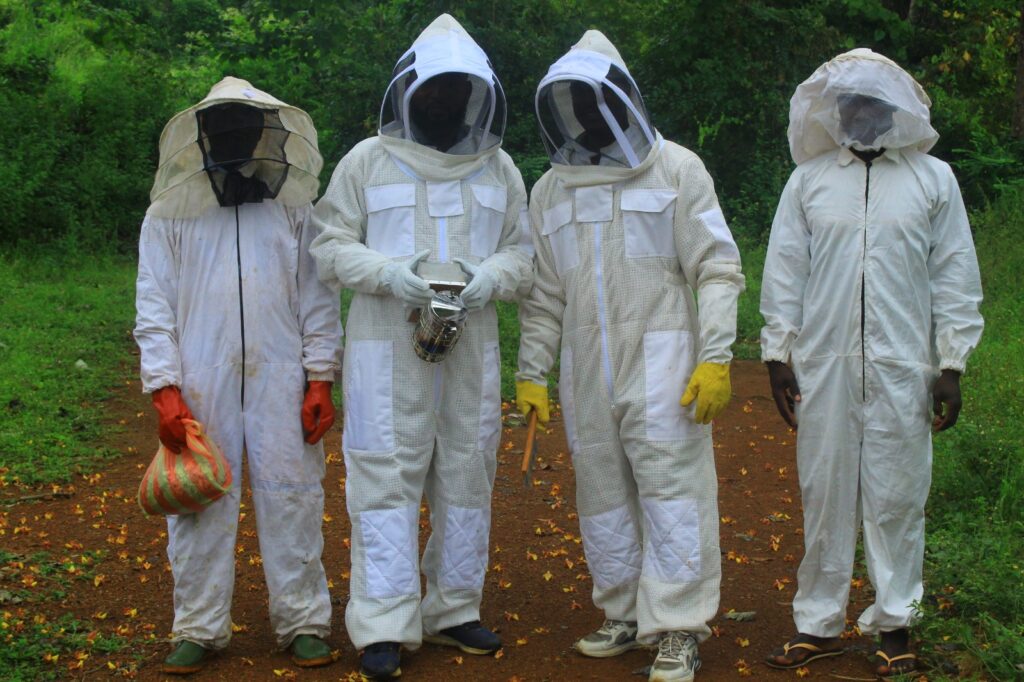
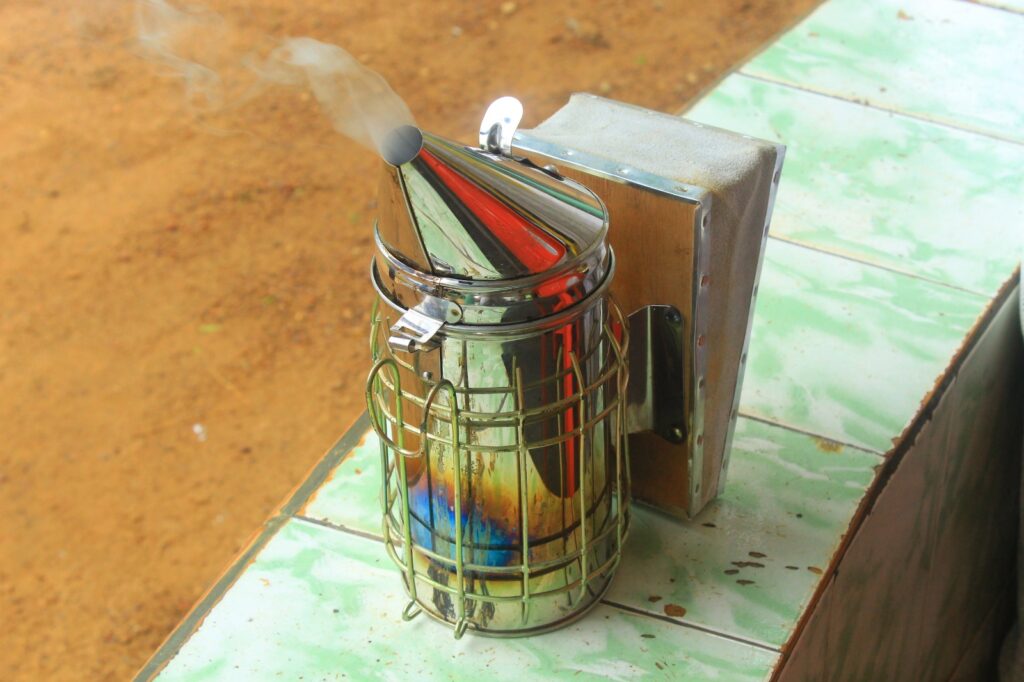
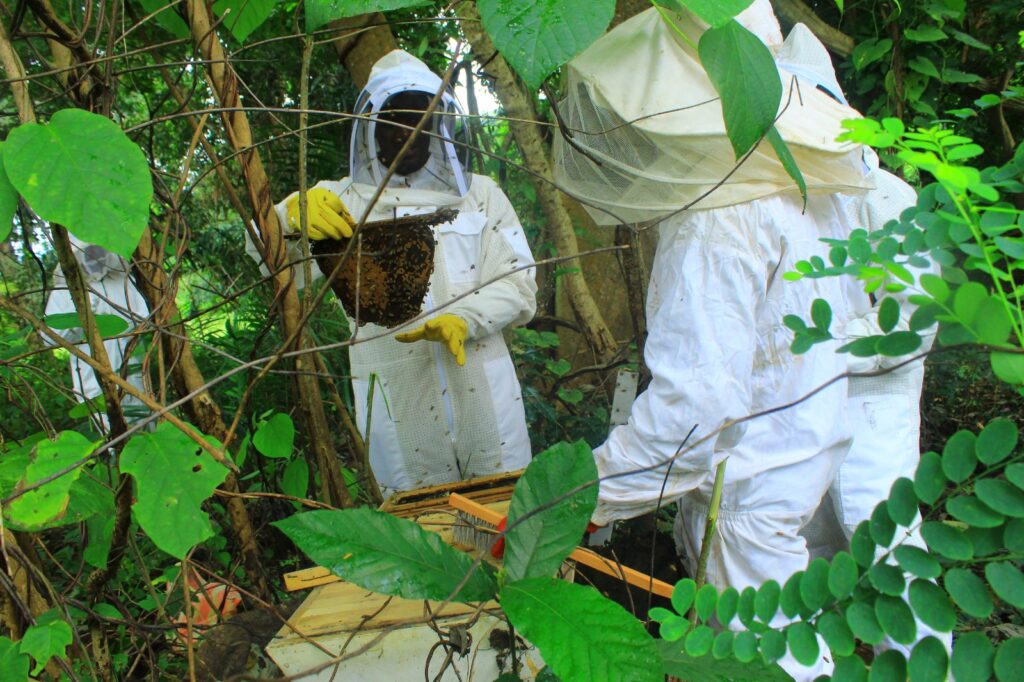
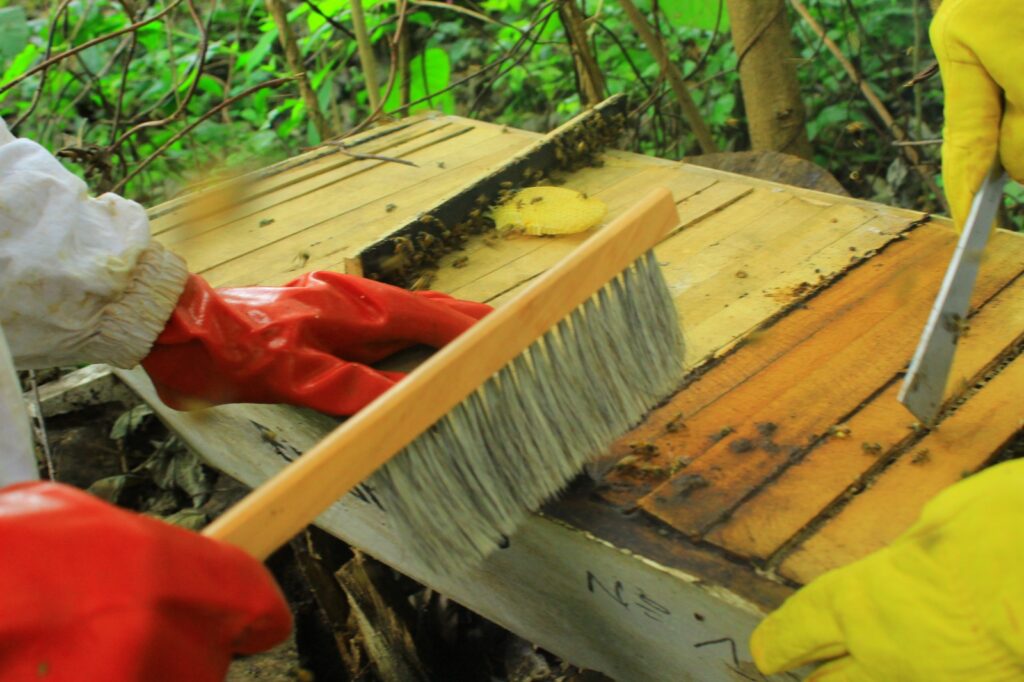
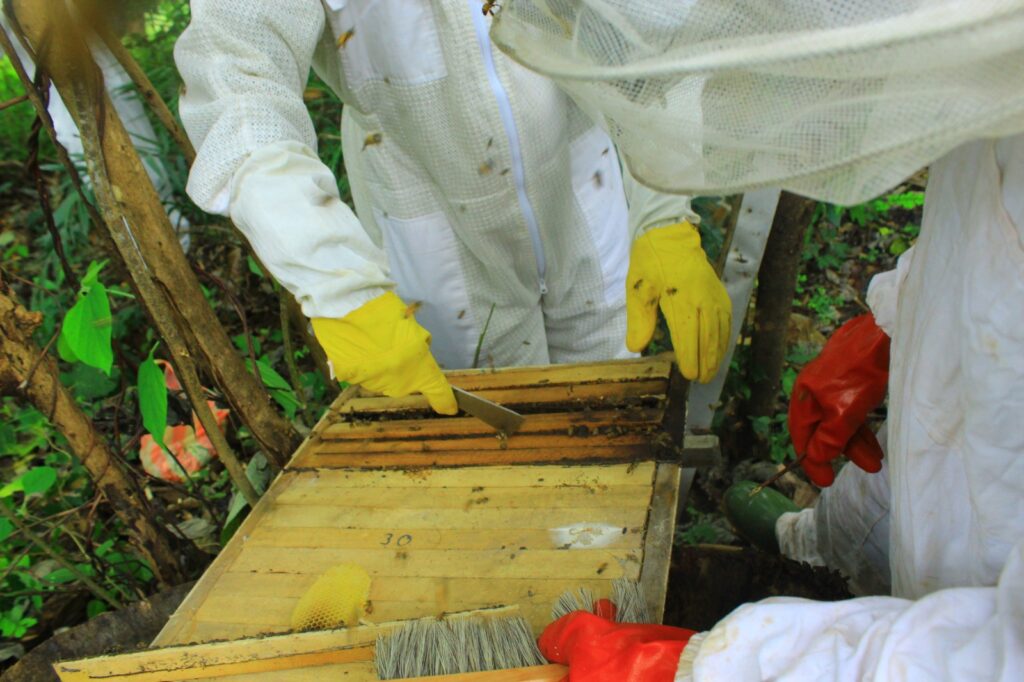
To handle the hives without stressing the bees or endangering the team, technicians wear full protective gear. They also use a smoker, a tool that produces smoke to calm the bees and make it easier to open the hives. Each frame is then carefully brushed to examine the colony’s activity and the quality of the honey reserves.
What does the inspection show?
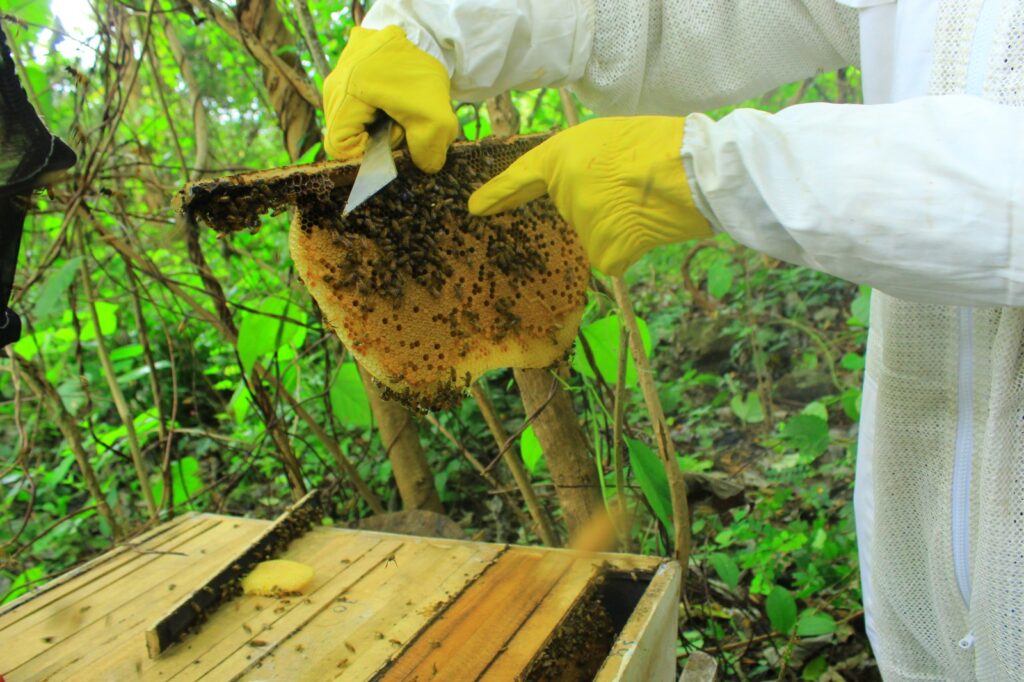
The evaluation of the frames revealed sustained construction activity. The honeycomb is well structured, indicating robust colonies. Examination of the removable frames shows a satisfactory rate of capping, meaning that the honey is mature and ready to harvest. The quality of the wax and the abundance of honey reserves confirm that the Kindia Kinsanyah region has favorable honey plant resources, conducive to the development of the project.
The performance indicators for the Kinsanyah site are therefore very positive. The bees are in excellent health and the harvest forecasts for the coming quarter are encouraging.
Why is this intervention important?
This initiative demonstrates that the beekeeping component of the AGRI-VERT project continues to be an important part of the economic resilience of local producers. In addition to producing honey, beekeeping enhances biodiversity and ecosystem services through pollination.